🧬 The People Pushing OCD Treatment Forward in 2026
ERP is still the gold standard. But a handful of researchers are making it more precise, more accessible, and more effective — especially for the people it hasn't worked for yet.
15 min read · June 2026
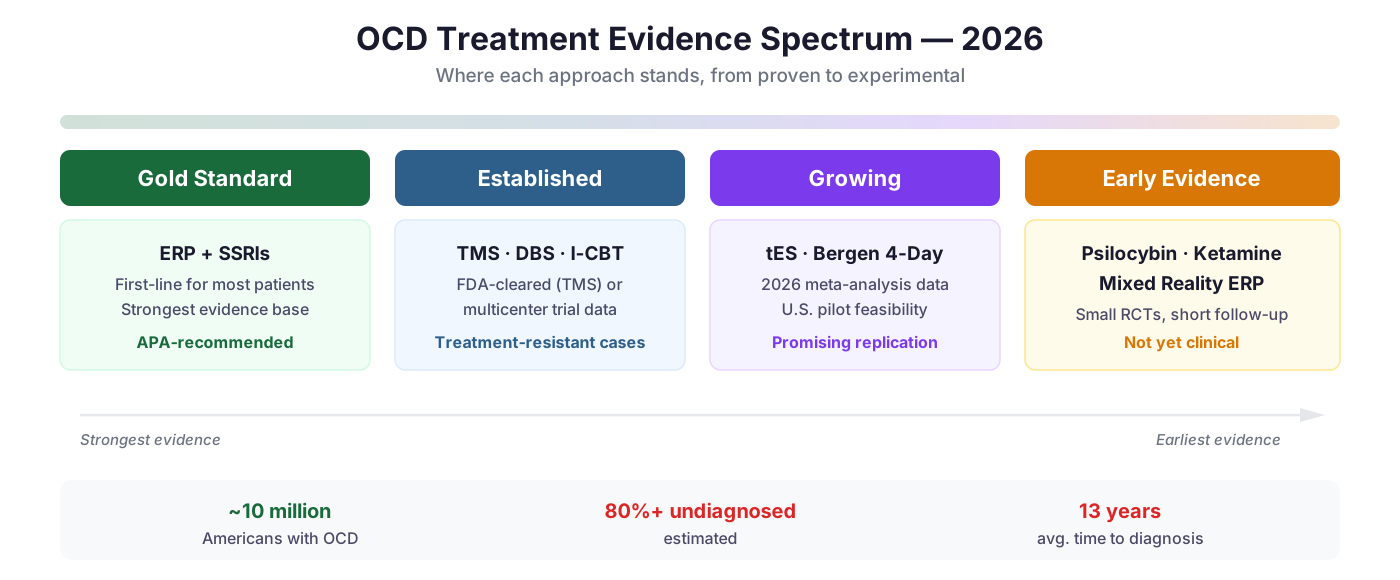
The Gold Standard Isn't Going Anywhere
Before getting into who's pushing the frontier, it's worth grounding this in what we already know. ERP remains the first-line psychotherapy for OCD in 2026, and SSRIs — a class of antidepressant medications that increase serotonin availability in the brain — remain the first-line medication. The combination of the two is still the most effective approach for most patients (APA Monitor, 2026).
Here's the problem in plain terms. OCD affects roughly 10 million people in the United States. More than 80% of cases are estimated to be undiagnosed. Of those who are diagnosed, fewer than 2% may be receiving the recommended treatment. On average, people live with symptoms for nearly 13 years before getting a correct diagnosis (APA Monitor, 2026). And treatment resistance — meaning the first-line approach doesn't work well enough — affects up to 60% of patients (*Nature Mental Health*, 2026).
So yes, ERP is the gold standard. But the gold standard alone is not solving the problem. That's what the researchers profiled here are working on.
Rewiring the Brain, One Circuit at a Time
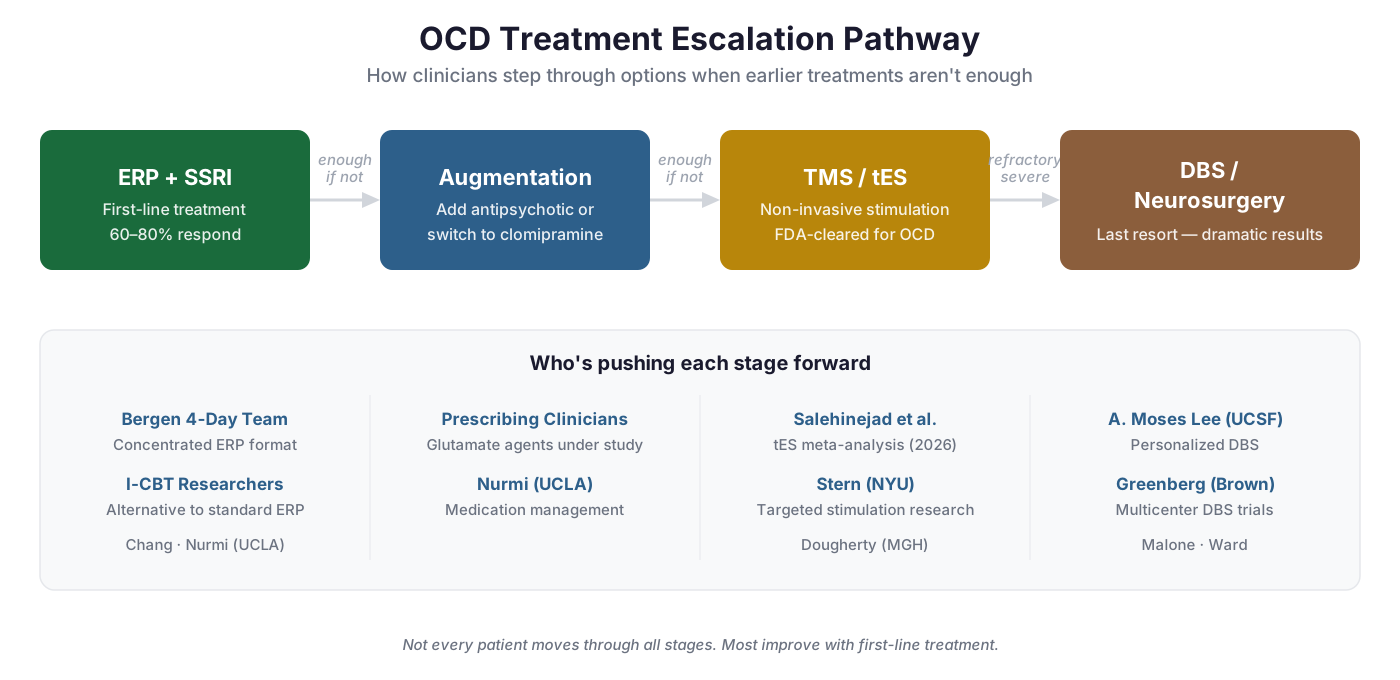
At the University of California, San Francisco, A. Moses Lee is doing something that sounds like science fiction but is very much real. Lee directs UCSF's OCD Program and is leading clinical trials in personalized deep brain stimulation — a surgical approach where tiny electrodes are implanted in specific brain regions to deliver continuous electrical pulses that can interrupt the circuits driving OCD symptoms (UCSF OCD Program).
What makes Lee's work different from earlier DBS research is the word "personalized." Previous DBS studies used roughly the same brain target for every patient. Lee's team is using a technique called stereoencephalography — temporarily placing recording electrodes across multiple brain regions to map where each patient's OCD-related signals are strongest — and then using that map to decide where to put the permanent stimulation electrodes (UCSF Clinical Trials). Think of it like this: instead of guessing where the fire is and spraying water in the general direction, they're using a thermal camera to find the exact hot spot first.
Andrew M. Lee, a lead scientist on UCSF's OCD trials, is working alongside this effort on cortical stimulation studies — exploring whether targeting the brain's outer surface with newer stimulation techniques can produce benefits without requiring the invasiveness of traditional DBS (UCSF Research Studies). Together, these projects represent where the entire field is heading: circuit-level, individualized treatment matched to your brain, not to a textbook average.
When Nothing Else Has Worked
For people with the most severe, treatment-resistant OCD — patients who have tried multiple medications, completed ERP, attempted TMS, and are still suffering — deep brain stimulation isn't an experiment. It's sometimes the only option left.
Darin D. Dougherty at Massachusetts General Hospital and Harvard Medical School is one of the leading U.S. investigators in DBS for OCD. He directs MGH's Division of Neurotherapeutics and has been a principal investigator on NIH-funded DBS trials, contributing both clinical evidence and mechanistic research on how DBS changes brain activity (McLean Hospital: Darin Dougherty).
Benjamin Greenberg at Brown University and Butler Hospital has been pursuing related research for over two decades. Greenberg co-directed two NIMH-funded Translational Research Centers focused on OCD brain circuitry and led a multicenter trial of DBS for intractable cases (Carney Institute, Brown University). His long-term follow-up data helps answer a critical question: does DBS produce lasting benefit? For the subset of patients who respond, the benefit can be sustained over years (IOCDF Expert Opinion on DBS).
Donald A. Malone, Jr. at the Cleveland Clinic and Herb Ward at the University of Florida have contributed to the same multi-site NIH-funded effort, expanding the evidence base across surgical teams and patient populations (IOCDF Expert Opinion on DBS). The more sites that demonstrate consistent results, the harder it becomes to dismiss DBS as anecdotal.
What DBS involves, plainly: it's brain surgery. Electrodes are permanently implanted, and the patient carries an implanted pulse generator — essentially a pacemaker for the brain. The procedure carries real surgical risk, and it is reserved for severe cases where every other option has been exhausted. But for the small number of people who need it, the results can be dramatic — people who couldn't leave their homes, couldn't hold jobs, couldn't maintain relationships, and after DBS, they could.
A Different Way to Challenge Obsessions
Not all the innovation is happening in operating rooms. One of the more interesting developments in OCD psychotherapy is inference-based cognitive behavioral therapy (I-CBT) — a newer approach generating real data.
Standard ERP works by having you deliberately face the situations that trigger obsessions and then resist performing compulsions. It's effective, but dropout rates are not trivial — some patients find the exposure component overwhelming. I-CBT takes a different angle: instead of focusing on the anxiety itself, it targets the reasoning process that generates the obsession. ERP asks can you tolerate this fear? and I-CBT asks why are you trusting this fear in the first place? (IOCDF Special Interest Group on I-CBT).
A multisite randomized controlled trial published in 2024, involving 197 participants across 20 sessions, found that both I-CBT and standard CBT produced significant symptom improvement. No significant between-group differences were found at any assessment point. The trial couldn't definitively prove I-CBT was non-inferior to standard CBT — the confidence intervals were too wide — but the results showed I-CBT is a viable treatment with potentially better tolerability (PMC, 2024).
What this means practically: I-CBT may work especially well for patients who struggle with the direct exposure component of ERP, or who have poor insight — meaning they're not fully convinced their obsessions are irrational. It's not a replacement for ERP, but it's a genuine addition to the toolkit.
Stimulating the Brain Without Surgery
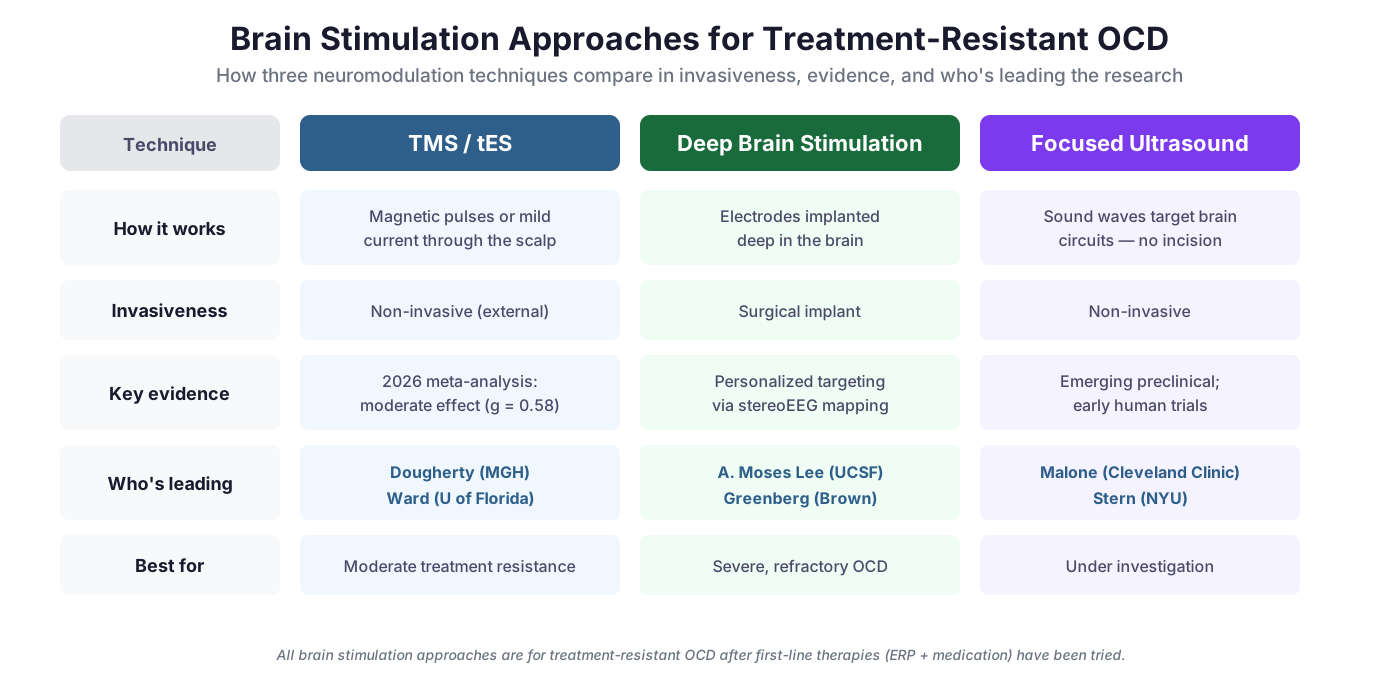
The FDA has already cleared deep transcranial magnetic stimulation — deep TMS — for OCD. TMS delivers magnetic pulses to specific brain regions through a coil placed against the scalp. No anesthesia, no incision, no hospital stay. It's positioned as an option for patients who have tried ERP and medication without adequate improvement (Mayo Clinic).
In 2026, a meta-analysis published in Nature Mental Health took the evidence further. Researchers analyzed transcranial electrical stimulation across 16 studies and found a moderate therapeutic effect (Hedges' g = 0.58) on OCD severity. The effect was strongest with twice-daily stimulation targeting the supplementary motor area, the orbitofrontal cortex, and the left dorsolateral prefrontal cortex (Salehinejad et al., *Nature Mental Health*, 2026).
What's exciting isn't just the effect size — it's the scalability. These devices are small, relatively inexpensive, and in principle could be used at home. The Nature Mental Health editorial explicitly noted the potential for home-based scalable interventions as a way to close the access gap (*Nature Mental Health* Editorial, 2026). We're not there yet — protocols still need optimization and safety data for unsupervised home use — but the direction is clear.
A separate analysis in the same issue compared invasive and non-invasive approaches head to head and found that all four major neuromodulation methods — DBS, lesion-based neurosurgery, TMS, and tDCS — were linked to substantial decreases in OCD severity. Invasive methods showed the largest effects, but non-invasive approaches provided "modest, yet clinically relevant, advantages" with far less risk (*Nature Mental Health*, 2026).
Understanding What Makes an OCD Brain Different
At NYU Langone, Emily R. Stern is studying sensory processing abnormalities — the observation that many people with OCD have unusual relationships with physical sensations. That feeling that something is "not right," the incompleteness that drives checking and repeating, the tactile sensitivity that makes certain textures intolerable — these are sensory phenomena, and Stern has linked them to hyperactivity in a circuit involving the insula and sensorimotor regions (NYU Langone OCD Research).
Her lab is testing whether pharmacological and neuromodulation approaches can target this circuitry directly — including ondansetron (originally developed for nausea) and TMS directed at the relevant brain regions. The broader goal is personalized medicine: instead of treating "OCD" as one thing, identify the specific brain patterns driving each person's symptoms and match the treatment to those patterns (NYU Faculty Profile).
This is the kind of work that doesn't produce a new pill you can take tomorrow. But it's foundational. If Stern and researchers like her can reliably map which circuits are overactive in a given patient, future clinicians could use that information to decide whether to start with intensive ERP, try a specific medication, go straight to TMS, or combine approaches from day one — instead of the current process of trying things sequentially and hoping one works.
Catching It Early
Most OCD research focuses on adults. But OCD typically first appears in childhood or early adolescence, and the earlier it's treated effectively, the better the long-term outcomes.
At UCLA, Susanna Chang and Erika Nurmi run one of the most respected child and adolescent OCD programs in the country. The program provides intensive outpatient treatment for youth ages 5 to 17 with severe OCD, centered on ERP and delivered four afternoons per week with both individual and group therapy sessions (IOCDF Clinic Directory). Chang focuses on empirically supported treatments for pediatric OCD, anxiety, and tic disorders. Nurmi, as Medical Director, manages medication treatment and brings a research perspective on the developmental and genetic dimensions of OCD (UCLA Brain Research Institute).
What makes UCLA's approach notable is that clinical care and active research feed each other. The experience of treating hundreds of young patients informs studies on what makes some children more vulnerable, which treatments work best at different developmental stages, and how to adapt ERP for kids who are too young to engage with it the way adults do.
If you're a parent: intensive, ERP-based programs designed specifically for young people exist, and the evidence for early intervention is strong. The earlier OCD is treated with the right approach, the less likely it is to become chronic and entrenched.
Four Days Instead of Four Months
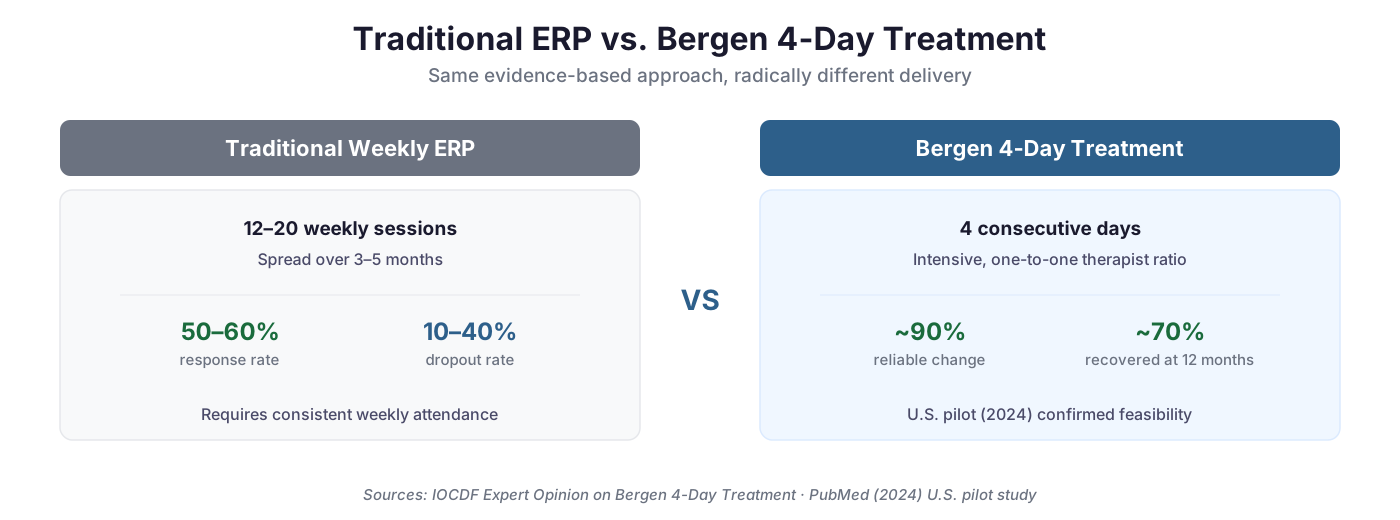
One of the most practical innovations in OCD treatment isn't a new drug or a brain scan — it's a scheduling change. The Bergen 4-Day Treatment, developed in Norway, compresses ERP into four consecutive days of intensive, therapist-assisted exposure in a group setting with a one-to-one therapist-to-patient ratio (IOCDF: Bergen 4-Day Treatment).
The results are hard to argue with. Approximately 90% of patients show reliable clinical change immediately after treatment, and nearly 70% are classified as recovered at 12-month follow-up. Those numbers rival or exceed what traditional weekly ERP produces over much longer timelines (IOCDF: Bergen 4-Day Treatment). A U.S. pilot study published in 2024 tested whether the format could work outside Norway and found it feasible and potentially effective in an American clinical setting (PubMed, 2024).
Why does this matter beyond the data? Because one of the biggest barriers to OCD treatment is time. Weekly ERP typically runs 12 to 20 sessions across three to five months. For people who work hourly jobs, live in areas with few OCD specialists, or are too symptomatic to sustain months of outpatient care, a four-day intensive format could be the difference between getting treatment and not getting it at all.
When AI Reads Your Brain Scan
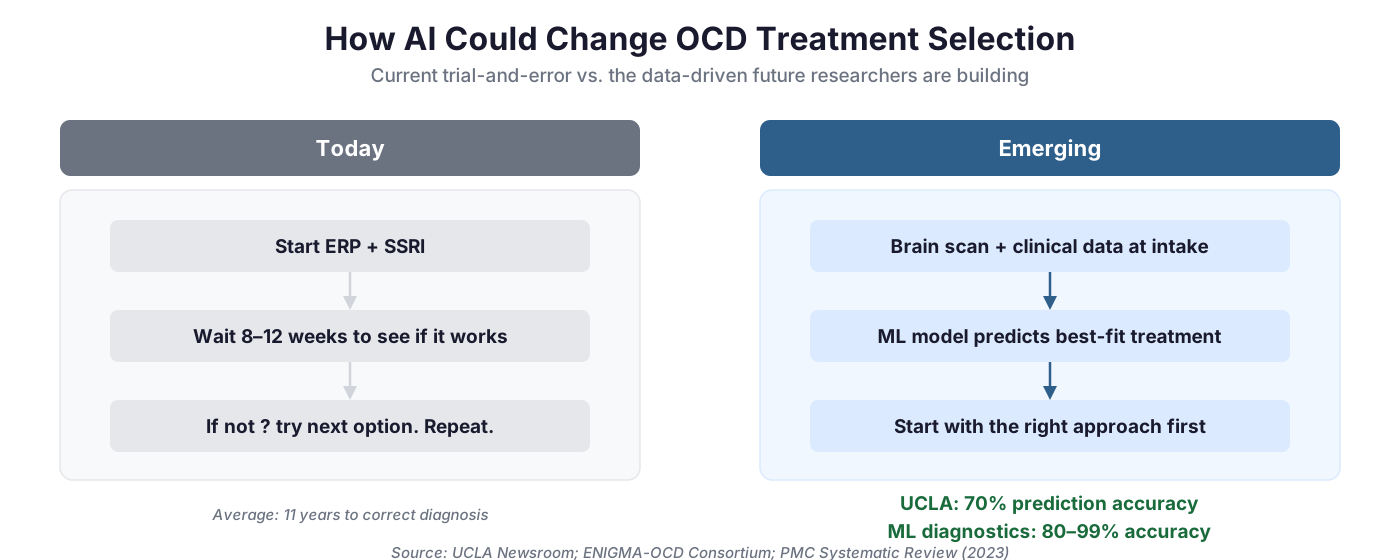
Artificial intelligence is entering OCD treatment — not as a chatbot that replaces your therapist, but as a tool that helps clinicians make better decisions about which treatment to try first.
Treatment prediction is the most concrete application right now. UCLA researchers demonstrated that machine learning applied to brain scan data can predict with 70% accuracy whether a patient will respond to CBT — significantly better than clinical judgment alone (UCLA Newsroom). In 2025, the ENIGMA-OCD consortium built a similar model using data from 159 patients across four treatment centers, aiming to make predictions more generalizable (PubMed, 2025). If these models hold up at scale, a brain scan at intake could flag whether to prioritize ERP, adjust medication strategy, or consider TMS earlier — instead of starting every patient on the same protocol and waiting weeks to see if it works.
Diagnostic accuracy is also advancing. A 2025 systematic review found deep learning models achieving 80–98% accuracy in identifying OCD from neuroimaging, EEG, and clinical data (PMC, 2025). That's striking given the current 13-year average delay to correct diagnosis. These tools are still in research — no clinic is diagnosing OCD from a brain scan today — but the trajectory is clear.
One important caution. A 2026 study in Nature Digital Medicine found that general-purpose AI chatbots can actually make OCD worse (*Nature Digital Medicine*, 2026). The mechanism is straightforward: when someone with OCD asks a chatbot am I a bad person? and gets a reassuring answer, it functions as a compulsion. The person gets momentary relief, the anxiety returns, they ask again. The chatbot becomes a reassurance machine, reinforcing the exact cycle that ERP is designed to break. AI in OCD works when designed by people who understand OCD. General-purpose tools that don't account for the compulsive cycle can do real harm.
The Experimental Frontier
Beyond the treatments with established or growing evidence, several approaches are generating early clinical data. None are ready for clinical recommendation, but they're past the theoretical stage — actual patients are being treated in actual trials. Here's where they stand, honestly.
Psilocybin
Psilocybin has the most momentum among the experimental approaches. A double-blind, placebo-controlled randomized trial found clinically significant reductions in OCD symptoms in the psilocybin group compared to placebo at 48 hours post-dosing (PMC, 2025). A separate 2025 study administered a single 10 mg dose to 19 adults with moderate-to-severe OCD and found measurable symptom reduction (PubMed, 2025). The proposed mechanism involves serotonin receptor pharmacology and neuroplasticity — potentially opening a therapeutic window for restructuring the rigid thought patterns behind OCD (*Nature Mental Health*, 2026). The samples are small and follow-up periods short, but a controlled trial showing real separation from placebo means psilocybin has crossed from speculation into early evidence.
Ketamine
Ketamine is a step further behind. A 2025 double-blind crossover study provided "preliminary evidence" for the efficacy of intramuscular ketamine in treatment-resistant OCD (PubMed, 2025). A small pediatric pilot of five patients showed symptom improvement with no serious adverse events (PubMed, 2025). Ketamine acts on the glutamate system rather than serotonin, making it mechanistically interesting for the roughly 40–60% of patients who don't respond to SSRIs. But optimal dosing, duration of effect, and long-term safety for OCD are all unknown. Status: preliminary.
Mixed reality exposure therapy
Mixed reality exposure therapy is the most recent entrant. A 2025 randomized trial in JAMA Network Open compared mixed reality ERP — where patients interact with digitally rendered contamination triggers overlaid on their real environment — against self-guided ERP for contamination-related OCD (PubMed, 2025). The appeal is clear: mixed reality can simulate exposure scenarios that would be difficult or impractical to arrange in a therapist's office. The evidence base is thin — this is a single trial — but Nature Mental Health flagged it as a current direction alongside digital CBT and AI-assisted therapy tools (*Nature Mental Health*, 2026). Status: very early.
The honest summary: psilocybin has crossed the threshold from anecdotal to early-stage evidence. Ketamine and mixed reality ERP are generating initial data but need larger, longer trials. All three represent genuinely novel mechanisms — not incremental variations — which is what makes them worth watching.
What This Means If You're Looking for Help
All of this research is encouraging, but it can also feel distant. If you're struggling with OCD right now, or trying to help a family member find care, the most immediate question isn't what's the latest neuroscience? It's how do I find a good therapist?
That question is harder than it should be. The APA estimates more than 80% of OCD cases are undiagnosed, and among those diagnosed, the vast majority are not receiving evidence-based treatment (APA Monitor, 2026).
OLEE Index was built to address one part of that gap. We score OCD providers across all 50 U.S. states and Puerto Rico on the clinical signals that predict quality care — ERP training, OCD caseload, specialization depth — so that finding a specialist doesn't require the same kind of trial-and-error these researchers are trying to eliminate from treatment itself. You can see exactly how we evaluate providers in our scoring methodology.
The direction of the field is unmistakable. ERP isn't going anywhere — it's the foundation, and every researcher profiled here would tell you the same thing. But on top of that foundation, they're building something new: personalized brain stimulation matched to your specific circuitry, new therapy models that work differently from traditional exposure, concentrated treatment formats that compress months into days, AI that predicts which treatment will work before you start it, non-invasive stimulation techniques that could eventually be delivered at home, and early-stage approaches for the patients nothing else has helped.
The best outcomes in 2026 are increasingly coming from thoughtful combinations — the right therapy, the right medication strategy, the right level of care, matched to the right patient. That future isn't hypothetical. It's being built right now, in the labs and clinics of the people described above.
Frequently Asked Questions
Who are the leading OCD researchers in the U.S. in 2026?
Key figures include A. Moses Lee at UCSF (personalized deep brain stimulation), Darin Dougherty at MGH (neuromodulation), Benjamin Greenberg at Brown (DBS clinical trials), Emily Stern at NYU Langone (OCD neurobiology), Susanna Chang and Erika Nurmi at UCLA (child and adolescent OCD), and Donald Malone at the Cleveland Clinic and Herb Ward at the University of Florida (multi-site DBS research).
What is the best treatment for OCD in 2026?
ERP remains the first-line psychotherapy and SSRIs remain the first-line medication. The combination of both is the most effective approach for most patients. For treatment-resistant cases, options include augmentation strategies, TMS, I-CBT, and for the most severe cases, DBS. The field is moving toward personalized treatment matching.
Does brain stimulation work for OCD?
Yes. The FDA has cleared deep TMS for OCD, and a 2026 meta-analysis in Nature Mental Health found that transcranial electrical stimulation produces a moderate therapeutic effect. For severe refractory OCD, DBS has shown sustained benefit over years. Non-invasive approaches are less dramatic but carry far less risk.
What is the Bergen 4-Day Treatment?
A concentrated ERP format where patients complete intensive exposure over four consecutive days with a one-to-one therapist ratio, rather than attending weekly sessions over months. About 90% show reliable change immediately, and nearly 70% are recovered at one year.
Can AI help with OCD treatment?
AI is being developed as a clinical decision-support tool — predicting treatment response from brain scans (70% accuracy at UCLA) and improving diagnostic accuracy (80–98% in deep learning models). But general-purpose AI chatbots can worsen OCD by reinforcing reassurance-seeking compulsions. AI works for OCD when designed by OCD specialists.
Does psilocybin work for OCD?
Early evidence is promising — a controlled trial showed real separation from placebo — but samples are small and follow-up periods short. Psilocybin is not an approved treatment and is only available in clinical trials. It needs larger, longer studies before clinical recommendations can be made.
Where can I find an OCD specialist?
OLEE Index scores providers across all 50 U.S. states and Puerto Rico on clinical signals that predict quality care. Academic medical centers like UCSF, MGH, NYU Langone, and UCLA also run specialized OCD programs. The IOCDF maintains a directory of OCD treatment programs.
This article is for informational purposes only and does not constitute medical advice, diagnosis, or treatment. All treatment decisions should be made in consultation with a licensed healthcare provider.
Sources cited in this article:
APA Monitor: OCD Diagnosis and Treatment (2026) · UCSF OCD Program · UCSF Personalized DBS Trial (NCT06347978) · UCSF Research Studies · McLean Hospital: Darin Dougherty · Carney Institute, Brown University: Benjamin Greenberg · IOCDF Expert Opinion on DBS · IOCDF Special Interest Group on I-CBT · I-CBT vs CBT Randomized Trial (PMC, 2024) · Mayo Clinic: OCD Treatment · Salehinejad et al., tES Meta-Analysis, *Nature Mental Health* (2026) · *Nature Mental Health* Editorial: Evolving OCD Treatment (2026) · NYU Langone OCD Research · NYU Faculty: Emily R. Stern · UCLA Child OCD IOP (IOCDF) · UCLA Brain Research Institute: Erika Nurmi · IOCDF: Bergen 4-Day Treatment · Bergen 4-Day U.S. Pilot Study (PubMed, 2024) · UCLA Newsroom: Brain Scan + AI for OCD Treatment Prediction · ENIGMA-OCD ML Treatment Prediction Model (PubMed, 2025) · AI in OCD Systematic Review (PMC, 2025) · AI Chatbots and OCD Risk (*Nature Digital Medicine*, 2026) · Psilocybin RCT for OCD (PMC, 2025) · Single-Dose Psilocybin for OCD (PubMed, 2025) · Ketamine for Treatment-Resistant OCD (PubMed, 2025) · Ketamine Pediatric Pilot (PubMed, 2025) · Mixed Reality ERP Trial (PubMed, 2025)
Looking for an OCD specialist in the U.S.?
We scored thousands of providers on the signals that predict quality care.
Find the right therapist